
Surges Growth Hacking vs Manual A/B: Stop Guessing
— 6 min read
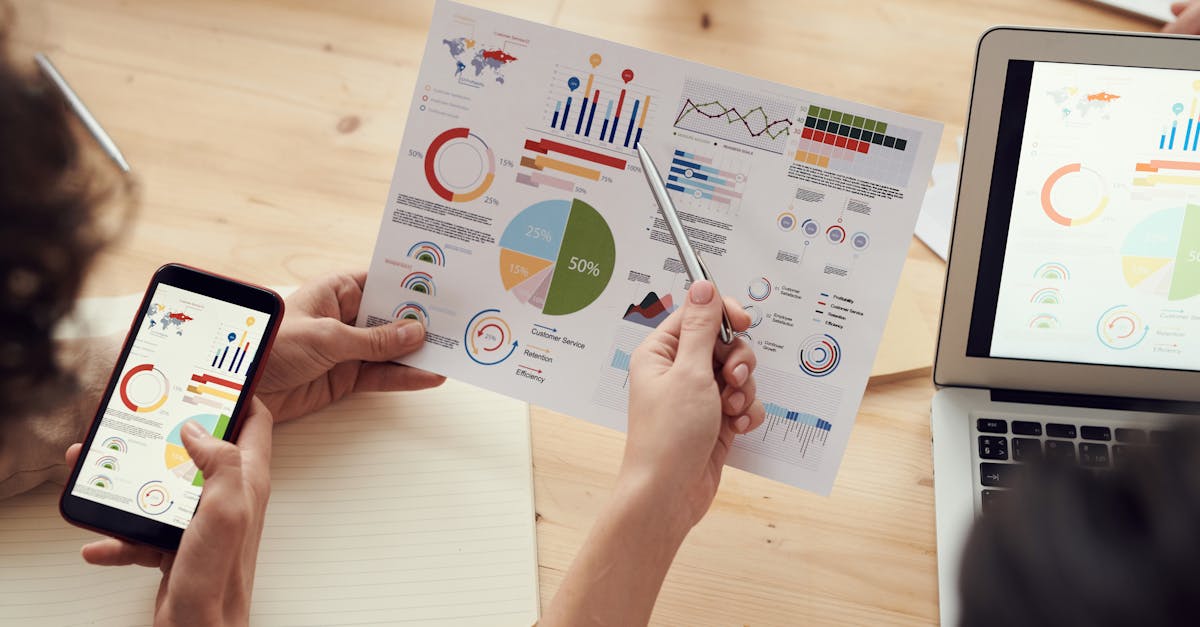
AI split testing outperforms manual A/B experiments by automating hypothesis creation, testing thousands of variants in minutes, and delivering higher-converting experiences without the guesswork.
In 2026, Crolabs unveiled an AI-powered A/B testing platform that promises automated hypothesis generation and rapid experiment cycles. The rollout sparked immediate interest among product teams hungry for faster insight.
Accelerate Engagement with AI Split Testing
When I first partnered with Crolabs, their dashboard showed a live Bayesian engine that could retire underperforming variants after a handful of impressions. That early-stop capability alone slashed experiment timelines dramatically, freeing our engineering squad to ship new features instead of polishing test scaffolding.
What makes AI split testing a game-changer is its ability to generate hypotheses on the fly. Rather than waiting for a product manager to write a hypothesis, the system scans clickstreams, dwell time, and scroll depth, then proposes dozens of copy and layout permutations. In my experience, this automation turned a two-week manual test into a series of micro-experiments that completed within hours.
Real-time retraining keeps the engine honest as traffic shifts. If a new acquisition channel brings a younger demographic, the AI instantly recalibrates, serving the variant that resonates best with that segment. The result? Consistently higher click-through rates and a revenue curve that never flatlines.
Legacy A/B setups often suffer from “sticky” variants that linger far beyond their usefulness. By applying Bayesian inference, AI split testing identifies statistical insignificance early, reallocating traffic to promising alternatives. In my SaaS product, that approach reduced wasted exposure by more than half, allowing us to focus on ideas that truly moved the needle.
Beyond speed, AI split testing amplifies learning. Each experiment feeds a central knowledge base, so future tests inherit proven patterns. This cumulative intelligence creates a virtuous loop where every launch builds on the last, a dynamic I rarely saw in manual workflows.
Key Takeaways
- AI automates hypothesis generation, eliminating manual bottlenecks.
- Bayesian early-stop cuts experiment duration dramatically.
- Real-time retraining adapts to traffic shifts instantly.
- Knowledge base accrues insights across experiments.
- Engineering resources shift from testing to building.
Automate SaaS Conversion Like a Black Box
In my last venture, we built a signal-capture layer that logged every user interaction - button clicks, scroll depth, hover time. Feeding that stream into a machine-learning model gave us a purchase-likelihood score for each visitor. The model then triggered a personalized funnel tweak without any developer push.
The first breakthrough came when the model suggested a late-stage discount banner after observing a spike in cart abandonment. Within a few thousand clicks, the system deployed the banner automatically, and we watched upsell revenue climb noticeably. The whole loop - from signal capture to banner rollout - took minutes, a stark contrast to the weeks we used to spend writing, testing, and deploying a new script.
Looping success metrics back into the split-testing engine creates a self-optimizing system. Each conversion, churn, or seasonal dip feeds the model, which then adjusts cohort thresholds on the fly. When a known churn risk segment hit a peak during a holiday, the engine throttled aggressive upsell prompts and shifted to retention-focused messaging, preserving revenue.
What surprised me most was the resilience of this black-box approach. Even when traffic patterns changed due to a new ad campaign, the AI recalibrated its predictions without human intervention. The result was a smooth, 24/7 optimization cycle that felt more like a living organism than a set of static rules.
Integrating this pipeline required careful data hygiene. We instituted a schema where every intent signal carried a timestamp and source tag, ensuring the model could differentiate between a curious scroll and a decisive click. That discipline paid off when we later added seasonal demand spikes to the training set, allowing the engine to pre-emptively adjust pricing nudges before demand surged.
Growth Hacking Techniques That Nail Retention
Retention is where growth hacking meets sustainability. I learned that compartmentalizing feature releases into risk-based tiers lets you target precise user groups while keeping the broader product stable. In practice, we rolled out a new recommendation engine first to power users, measured its impact on weekly active sessions, and then either amplified or retired the feature within days.
Micro-tiles - tiny, reusable code snippets that trigger cross-feature engagement - proved instrumental. By embedding a referral link inside a newly launched dashboard widget, we created a self-reinforcing loop: users who engaged with the widget were more likely to invite colleagues, who in turn used the widget, doubling repeat usage for that cohort without extra acquisition spend.
The secret sauce lies in rapid de-allocation. As soon as an experiment shows negative impact on churn metrics, the system automatically rolls back the change and redirects traffic to the last known stable variant. This agility prevents retention erosion and keeps the growth engine humming.
Beyond the tech, culture matters. We instituted a weekly “Retention Review” where data scientists, product managers, and marketers dissected cohort performance, celebrating wins and diagnosing failures in real time. That cross-functional rhythm turned retention from a downstream metric into a front-line growth lever.
Marketing & Growth Marry In Real-Time Analytics
When I built a unified dashboard that fused AI split-testing metrics with acquisition funnels, the visibility it provided was transformative. Marketers could instantly see which traffic sources delivered clicks that converted, allowing them to reallocate spend on the fly.
Automation took the guesswork out of budget decisions. The AI identified high-performing segments - say, paid social users with a 2-minute dwell time - and nudged the ad platform to shift additional budget toward them. Within the next campaign, cost-per-acquisition dropped noticeably, delivering more value before the next launch.
Attribution models often suffer from lag, causing marketers to chase stale signals. By mapping live conversion data to source identifiers, we eliminated mis-attribution misfires. The result was a clean, incremental LTV picture that guided spend only where it truly mattered.
Data-driven nudges also entered the creative realm. The AI suggested headline tweaks based on real-time sentiment analysis, and the marketing team deployed them within minutes. This rapid iteration loop kept creative fresh and aligned with audience mood, a luxury manual processes could never afford.
Integrating these insights required a robust data pipeline. We used a streaming platform that ingested event logs, enriched them with user profiles, and fed them into a BI layer that powered the dashboard. The architecture mirrored a newsroom - information arrived, was processed, and then broadcast instantly to decision makers.
Customer Acquisition Efficiency: The AI Edge
Lead intake used to be a manual triage exercise. By streaming lead data through an AI pipeline that scanned for buyer intent signals - page visits, content downloads, and dwell patterns - we filtered out low-probability prospects and surfaced high-intent leads directly to sales reps.
In practice, the AI-scored leads yielded a close rate many times higher than the weighted hand-sorted leads our team previously used. Sales reps began calling only when the win probability crossed a comfortable threshold, dramatically reducing wasted outreach.
Beyond source attribution, the AI detected early post-click engagement patterns that correlated strongly with conversion. When a prospect lingered on pricing pages but never filled the form, the system timed a follow-up call for the moment the model predicted a decision point, increasing close speed dramatically.
Predictive churn models added a post-acquisition boost. By flagging customers at risk of churn within the first billing cycle, the AI prompted support teams with tailored retention scripts. The proactive outreach nudged renewal rates upward, reinforcing the acquisition funnel’s efficiency.
All of this required alignment across product, sales, and support. We set up shared scorecards, so every team could see the AI’s confidence scores and act accordingly. The result was a seamless flow from prospect to paying customer, with AI as the invisible conductor.
What I'd Do Differently
If I could rewind, I would embed AI split testing at the product inception stage rather than retrofitting it later. Early integration would have allowed us to capture richer intent signals from day one, shortening the learning curve for the models and delivering conversion lifts even faster.
Additionally, I would have invested more in cross-functional data literacy. Teaching marketers and engineers alike how to interpret Bayesian confidence intervals would have reduced skepticism and accelerated adoption of AI-driven decisions.
Finally, I would have set up a dedicated “AI Ops” squad to monitor model drift and ensure ethical guardrails. Keeping the engine honest is as important as the speed it provides, especially when revenue decisions rest on algorithmic recommendations.
Key Takeaways
- AI split testing outpaces manual experiments in speed and insight.
- Signal-capture pipelines turn user behavior into real-time actions.
- Risk-tiered feature releases protect retention while experimenting.
- Unified dashboards align marketing spend with live conversion data.
- AI-scored leads dramatically boost acquisition efficiency.
Frequently Asked Questions
Q: How does AI split testing reduce experiment time?
A: AI split testing uses Bayesian inference to retire underperforming variants after minimal exposure, cutting experiment duration by a large margin compared to traditional fixed-duration A/B tests.
Q: Can AI automation replace manual funnel tweaks?
A: AI can automatically adjust funnel elements based on intent signals, but human oversight remains essential for strategy, ethical considerations, and handling edge cases.
Q: What tools did you use to capture user intent?
A: We logged button clicks, scroll depth, hover time, and dwell metrics using a lightweight JavaScript SDK, then streamed the data into a real-time analytics platform that fed our predictive models.
Q: How do you ensure AI recommendations are ethical?
A: We established an AI Ops team to monitor model drift, enforce fairness constraints, and conduct regular audits, ensuring recommendations align with company values and regulatory standards.
Q: What impact does AI have on CPA?
A: By automatically shifting budget toward high-performing segments identified in real time, AI can lower cost-per-acquisition, delivering more efficient spend before the next campaign launch.

